
What’s in This Guide
- Who Pays for a Broken Sewer Lateral? The Quick Answer
- Why Sewer Lateral Responsibility Matters for Alpharetta Homeowners
- What Is a Sewer Lateral, and Where Does the Property Line Fall?
- Sewer Lateral Responsibility Matrix for Alpharetta Properties
- When Might Fulton County Get Involved?
- What To Do When a Sewer Lateral Fails: Step by Step
- What Affects the Cost of Sewer Lateral Repair in Alpharetta?
- Frequently Asked Questions
- Ready to Confirm Sewer Lateral Responsibility on Your Alpharetta Property?
A soggy patch keeps forming near the driveway. A drain gurgles every time the washing machine runs. A water bill climbs for no obvious reason. For an Alpharetta homeowner facing signs like these, the harder question usually is not what is wrong. It is who has to pay to fix it.
The pipe connecting a house to the public sewer system is called a sewer lateral, and figuring out who owns that section of pipe decides whether a repair lands on the homeowner or on Fulton County. A quick search for sewer repair near you turns up plenty of contractors, but very few explain the property line rules that settle sewer lateral responsibility before any work begins.
This guide breaks down what Fulton County's own guidance says about private sewer line ownership, where the property line actually falls, and when a property line sewer repair might bring the county into the picture.
Quick Facts
- Homeowners are generally responsible for the sewer lateral serving their property.
- Public utilities typically maintain the main sewer line rather than the private lateral.
- Utility assistance with lateral issues may depend on location, access, and specific circumstances.
- A sewer camera inspection can help identify the location and nature of a blockage or failure.
- Utility lines should be located before excavation begins.
Who Pays for a Broken Sewer Lateral? The Quick Answer
In nearly every case, the homeowner is responsible for the sewer lateral running from the house to the property line, even where that pipe crosses a public road right-of-way or a county sewer easement. Fulton County owns and maintains the public sewer main under the street.
Once wastewater leaves the home and travels through the lateral, it remains the owner’s pipe and the owner’s repair bill until it reaches that main line. An unexplained increase in a home’s water bill can also be an early reason to investigate possible underground plumbing problems. Knowing when you need professional sewer line repair can save significant time and money.
Why Sewer Lateral Responsibility Matters for Alpharetta Homeowners
Many homeowners assume that because a broken pipe sits under county right-of-way or near the street, the county must own it. That assumption gets expensive fast. A collapsed lateral left unaddressed can undermine a driveway, saturate a foundation footing, or force a repeated backup into the home.
Finding reliable sewer repair near you becomes essential when urgent issues threaten your property’s plumbing system.
Understanding where financial responsibility starts and stops also affects how quickly a repair gets approved. Property managers, HOAs, and commercial operators dealing with a shared or long-run lateral need the same clarity, since delayed decisions usually mean a bigger repair scope later.
What Is a Sewer Lateral, and Where Does the Property Line Fall?
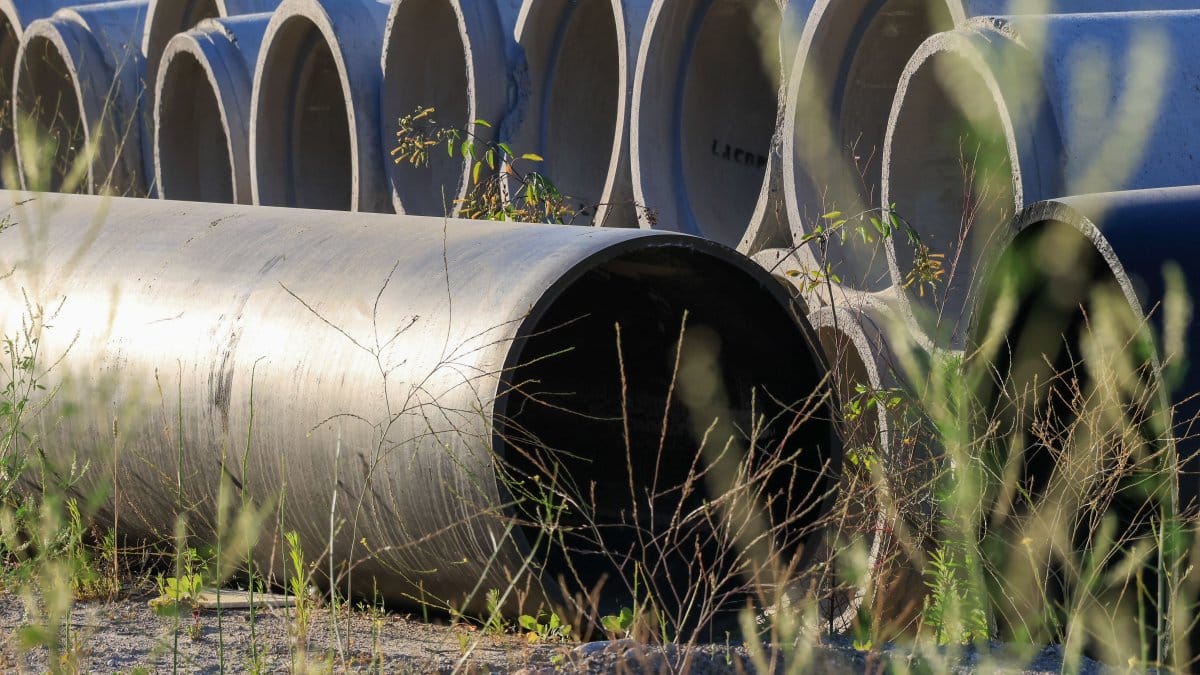
A sewer lateral is the underground pipe that carries wastewater from a building's plumbing out to the public sewer system. It typically runs from the foundation, under the yard or driveway, to a connection point at or near the public main.
The path from house to street generally breaks into four segments:
|
Segment |
Where It Sits |
|
Interior plumbing |
Inside the home's foundation walls |
|
Sewer lateral |
From the foundation, across the yard, to the property line |
|
Right-of-way or easement segment |
Where the lateral crosses public road right-of-way or a county easement before reaching the main |
|
Public sewer main |
Beneath the street, running to the treatment system |
According to Fulton County's sewer design standards, lateral cleanouts are installed at the edge of the right-of-way on the owner's property, marking a visible reference point for where the private line runs closest to the street.
Sewer Lateral Responsibility Matrix for Alpharetta Properties
The table below summarizes who typically carries repair responsibility at each segment, based on Fulton County's published guidance.
|
Segment |
Typically Responsible |
Notes |
|
Interior plumbing |
Homeowner |
Owner-maintained regardless of any lateral rule |
|
Sewer lateral, house to property line |
Homeowner |
Applies even where the pipe runs beneath landscaping or a driveway |
|
Lateral segment within right-of-way or easement |
Homeowner, with limited county assistance possible |
County support depends on health risk, a licensed plumber on site, and a signed release |
|
Public sewer main |
Fulton County Public Works |
County-owned and maintained once the lateral connects to it |
When Might Fulton County Get Involved?
Fulton County Public Works can step in to help clear a lateral blockage located within a right-of-way or sewer easement, but only under specific circumstances. Homeowners who receive Fulton County service line letters should also pay attention to the location and condition of the line referenced before arranging repairs. Per the county’s published guidance, all three of the following must apply:
- The blockage poses a serious threat to public health that needs urgent resolution.
- A private plumbing professional hired by the property owner is present at the site.
- The property owner signs a release holding the county harmless for any damage that happens during the county’s work.
Outside of these conditions, repair and replacement of the lateral remains the homeowner’s responsibility, even for the portion sitting under the public right-of-way.
What To Do When a Sewer Lateral Fails: Step by Step
Step 1: Watch for Early Warning Signs
Slow drains at multiple fixtures, gurgling sounds, sewage odor in the yard, or a soggy area that will not dry out often point to a lateral issue rather than a single clogged drain. Recurring clogs in the same drain can also indicate a persistent restriction that needs closer evaluation rather than repeated surface-level clearing.
Step 2: Schedule a Sewer Camera Inspection
A camera inspection confirms the exact location, material, and condition of the pipe before any digging happens. Camera inspections can also be useful when drain cleaning involves recurring blockages, helping determine whether a deeper pipe problem is contributing to the issue. This step is how a licensed plumber determines whether the damage sits on the homeowner’s side of the property line or closer to the county main.
Step 3: Confirm the Failure Point Against the Property Line
Comparing the camera footage against the property survey and any visible cleanout markers helps establish whether the repair falls under homeowner responsibility or qualifies for one of the narrow county assistance conditions described above.
Step 4: Request a Utility Locate Before Any Digging
Before excavation of any kind, Georgia law requires a locate request through Georgia 811’s online or phone ticket system. This step marks the approximate location of other underground utilities so a repair crew does not strike gas, electric, or water lines while accessing the lateral.
Step 5: Choose a Repair Method Based on the Findings
Depending on pipe material, depth, and the extent of damage, a licensed plumber may recommend trenchless sewer line repair, such as pipe lining or pipe bursting, or a targeted open-cut repair. These approaches are also relevant when evaluating outdoor sewer and water line repair, particularly where excavation could affect landscaping, driveways, or hardscaping. Trenchless methods are often used where possible because they reduce disruption to these areas.
What Affects the Cost of Sewer Lateral Repair in Alpharetta?
Sewer lateral repair costs can vary significantly depending on the property, pipe condition, and work required. Rather than relying on a fixed price, homeowners should expect estimates to reflect several site-specific factors.
Repair Method
The type of repair can influence overall cost. Common approaches may include trenchless lining, pipe bursting, or traditional open-cut excavation.
Pipe Depth, Length, and Material
Deeper or longer sewer laterals can require more labor and equipment. Existing pipe materials, such as cast iron, clay, or PVC, may also affect the repair approach.
Property Access and Site Conditions
Trees, driveways, landscaping, hardscaping, nearby structures, and utility conflicts can make access more complicated and may increase restoration needs.
Extent of the Damage
A small localized defect may require a different scope of work than widespread cracking, collapse, root intrusion, or deterioration along a larger section of pipe.
Permits and Restoration
Permitting requirements, right-of-way coordination, pavement repair, landscaping restoration, and other site repairs can add to the total project scope.
Timing and Urgency
Emergency or time-sensitive repairs may involve different scheduling, labor, or access considerations than planned work.
Start With a Sewer Camera Inspection
A sewer camera inspection is typically the best starting point for estimating repair needs because it helps identify the location and condition of the affected pipe before a repair method is selected.
Frequently Asked Questions
Who owns the sewer lateral pipe on my property?
The homeowner owns and is responsible for the sewer lateral running from the house to the property line, including any portion that crosses a public road right-of-way or county easement.
Does Fulton County ever repair a sewer lateral inside the right-of-way?
Public Works may assist with a blockage inside the right-of-way, but only when there is a serious public health risk, a private plumber is present, and the owner signs a release. Outside of those conditions, the repair remains the owner’s responsibility.
What is the difference between a sewer lateral and the public sewer main?
The sewer lateral is the private pipe connecting a single property to the public system. The public sewer main is the larger pipe beneath the street that the county owns, operates, and maintains. The connection point helps determine where private responsibility ends and public responsibility begins.
Can a homeowner dig up a sewer lateral without professional help?
Digging without a utility locate and a proper assessment of pipe depth and location creates a real risk of striking other underground utilities and worsening the damage. A licensed plumber should evaluate the lateral, confirm the repair area, and coordinate any required utility locate before excavation begins.
How can a homeowner find out exactly where the property line and lateral run are?
A property survey shows the legal property line, while a sewer camera inspection paired with a review of cleanout markers can help show where the physical lateral runs. Together, these tools can help determine where any blockage or damage sits relative to the property boundary.
Ready to Confirm Sewer Lateral Responsibility on Your Alpharetta Property?
If you are searching for sewer repair near you, Zippy Plumber works exclusively on underground pipe systems, from the foundation to the street, across Alpharetta and the North Atlanta area. Every job starts with a camera inspection so homeowners see the actual condition of the lateral before any decision about digging gets made.
A documented inspection is the clearest way to know whether a repair falls on the homeowner’s side of the property line.
Related Posts